The relationship between the disciplines of digital and ICT planning, enterprise architecture and portfolio management within the context of digital or ICT planning activities is highlighted in the diagram below.
Figure 1: Integration of digital and ICT planning, enterprise architecture and portfolio management functions
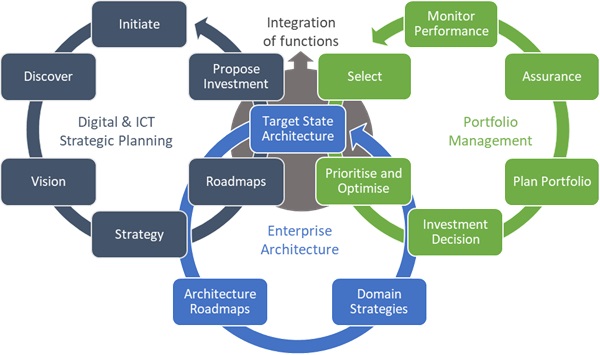
Enterprise architecture and initiative proposals
The relationship between digital and ICT strategic planning and enterprise architecture will become evident during the activities used to develop target state architecture and roadmaps based on the digital or ICT strategy or plan.
Practitioners should refer to the Queensland Government Enterprise Architecture (QGEA) and must engage planning and enterprise architecture practitioners to work iteratively with stakeholders to develop roadmaps to enable achievement of the digital or ICT vision and objectives. Practitioners and enterprise architects must also work with investment and portfolio specialists to translate the digital or ICT strategy or plan and roadmaps into specific initiatives proposals.
Portfolio management and initiative proposals
Digital and ICT strategic planning establishes the context within which portfolio management operates by providing the basis for determining the scope of the digital and ICT portfolio and the basis for the prioritisation of individual initiatives through the development of initiative proposals.
By collectively analysing all the initiative proposals, portfolio management addresses six fundamental questions.
- Are the programs and projects in our portfolio necessary in the context of our strategic objectives?
- Is the agency’s portfolio, together with BAU activities, sufficient to its strategic objectives?
- Is the overall level of risk acceptable?
- Is the portfolio of initiatives achievable?
- Is the portfolio affordable – and if not, which initiatives should be dropped or re-scheduled?
- What are the measures against which the performance of the portfolio will ultimately be assessed?
Through selection and prioritisation-based initiative proposals; portfolio management aims to ensure the agency’s change initiatives represent the optimum allocation of limited resources in the context of the agency’s strategic objectives and broader investment portfolio, and that the portfolio is maintained if conditions change.
Portfolio management also provides information on the contribution that current programs and projects make to strategic objectives. This can lead to a change in strategy, based on achievement of unplanned benefits or failure to realise planned benefits.
- Last updated:
- 7 December 2022